www.orthobiology.ch

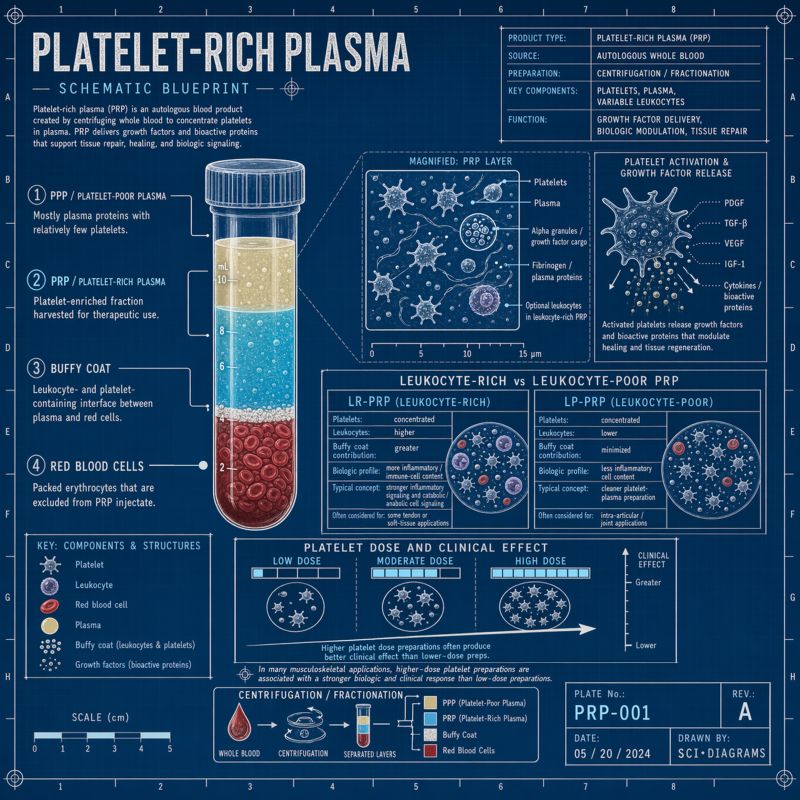
Platelets are the driving force behind the PRP which contain over a thousand proteins and up to 1500 actual bioactive factors.
[Boswell
SG, Cole BJ, Sundman EA, Karas V, Fortier LA. Platelet-rich plasma: a
milieu of bioactive factors. Arthroscopy. 2012;28(3):429-439.
doi:10.1016/j. arthro.2011.10.018]
Platelet-rich plasma has 7 essential proteins:
platelet-derived growth factor (PDGF), transforming growth factor b
(TGF-B), vascular
endothelial
growth factor (VEGF), epidermal growth factor, insulin-like growth
factor, fibroblast growth factor, fibrin, fibronectin, and
vitronectin. [Pavlovic
V, Ciric M, Jovanovic V, Stojanovic P. Platelet rich plasma: a short
overview of certain bioactive components. Open Med. 2016;11(1):242-247.
doi:10.1515/med-2016- 004 ]
Effects
(selected): chondrocyte proliferation and differentiation, reduce
cartilage breakdown, introduce adult mesenchymal stem cells to the
area, promote anti-inflammation, promote the formation of
synoviocytes that secrete hyaluronic acid, and act as a scaffold for
cellular
repair, reduce synovial inflammation and mitigation of cartilage deterioration.
[Cottom
JM, Verdoni TJ. Orthobiologics in the Foot and Ankle: An Update on the
Current Literature. Foot Ankle Spec. 2025 Nov 1:19386400251382280. doi:
10.1177/19386400251382280]
- LR-PRP
for soft tissue injuries such as tendonitis/tendinosis: IL-1 Ra,
IL-4, IL-8= antiinflammatory; MMP-9 = chondrotoxic. LR-PRP is
more effective in regulating inflammation and
promoting angiogenesis compared with LP-PRP
- LP-PRP for intra-articular injections: does not express MMP-9